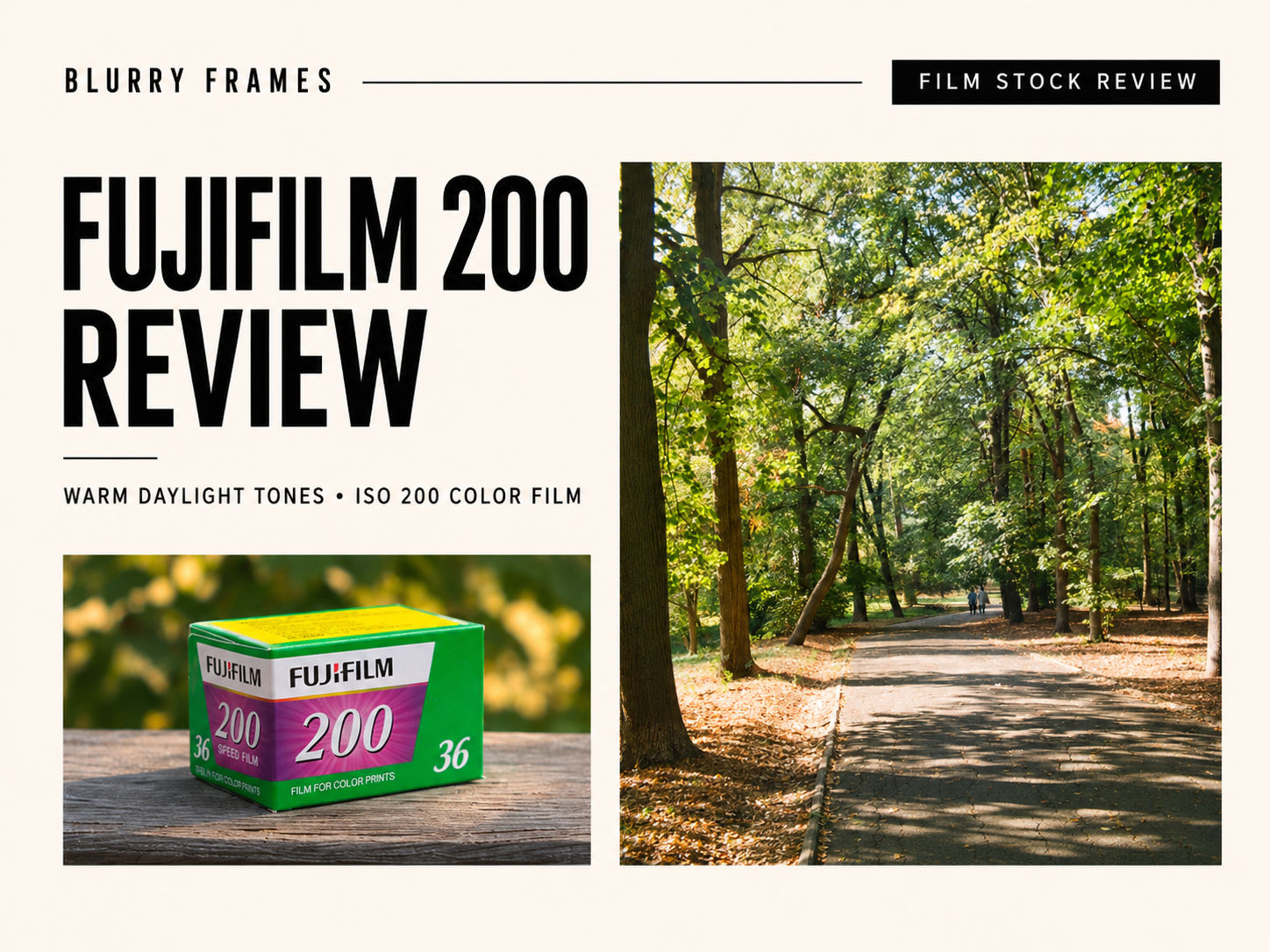
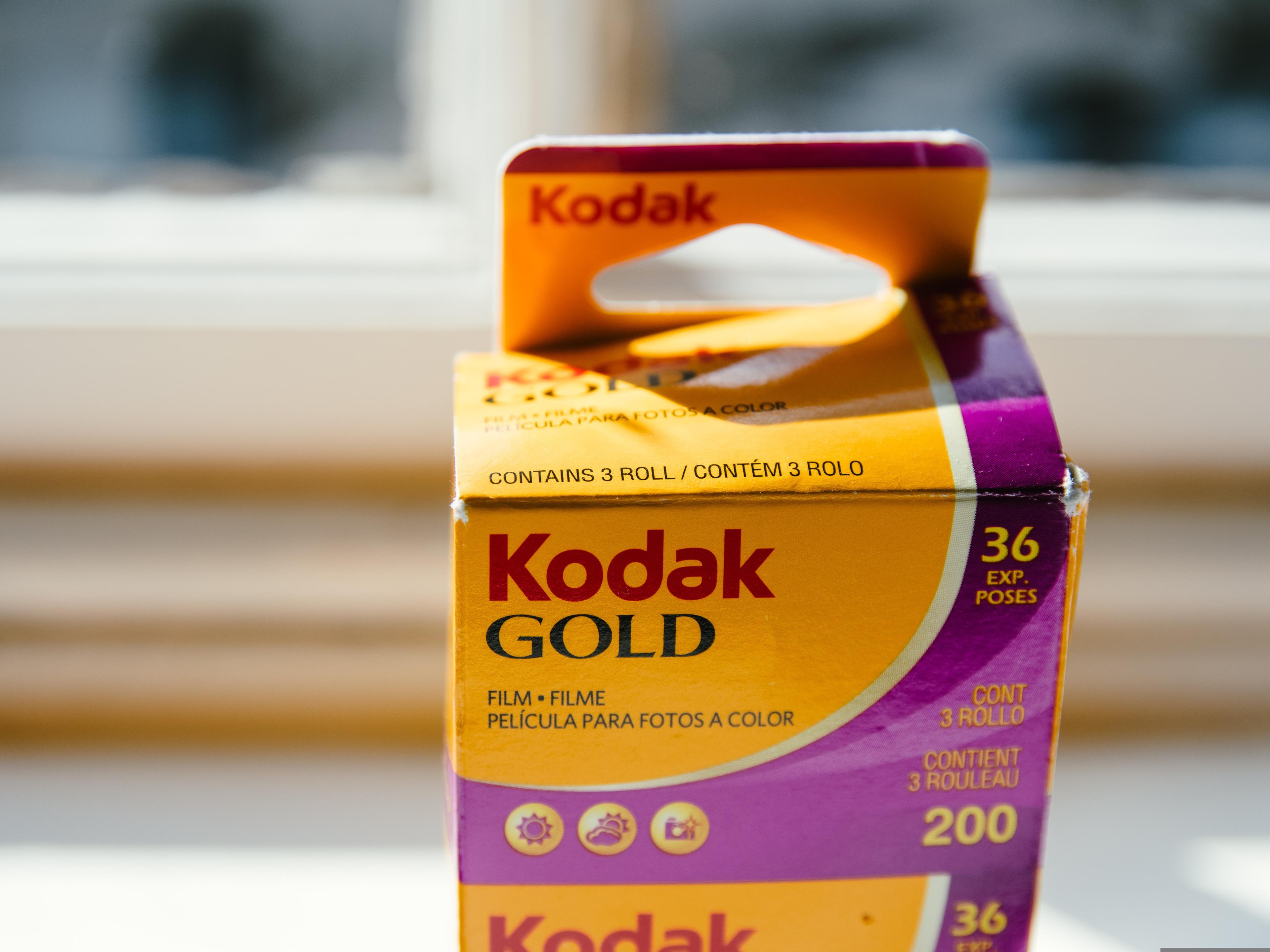
After shooting both FUJIFILM 200 and Kodak Gold 200, I would say they are quite similar, but I wouldn't necessarily call them the same film. Gold still looks a little warmer to me, and so far, I've been getting sharper results with finer-looking grain from it. What surprised me most, though, is that the newer FUJIFILM 200 reminds me much more of Kodak Gold than of the older Fujicolor C200.
I've shot plenty of Gold over the years, while my experience with the newer Fuji is currently limited to one roll. Both films were developed and scanned by the same lab, and the shooting conditions were reasonably similar. This isn't a controlled side-by-side test, but it gives me a good starting point for comparing the two.
FUJIFILM 200 vs Kodak Gold 200 at a Glance
| Characteristics | FUJIFILM 200 | Kodak Gold 200 |
|---|---|---|
| Film speed | ISO 200 | ISO 200 |
| Film type | Color negative | Color negative |
| Format compared | 35mm | 35mm |
| Development | C-41 | C-41 |
| Color in my scans | Warm, natural greens | Slightly warmer |
| Grain in my scans | More noticeable | Finer-looking |
| Sharpness in my scans | Good | Slightly better |
| Price | Comparable locally | Comparable locally |
Swipe horizontally to view the full table.
From a practical standpoint, there isn't much separating them. You can load either film into your camera, meter at ISO 200 and have it developed at the same lab without changing anything about the way you shoot.
The Colors Are Surprisingly Close
When I received my FUJIFILM 200 scans, I immediately noticed the resemblance to Gold. Having shot the older C200 before, I was expecting something cooler, particularly in the greens. Instead, I got warm yellows and a color palette that felt quite familiar.
Looking through my Gold photographs, I still find them slightly warmer. The photographs of sunlit buildings are particularly good examples. The pale stone has a creamy yellow appearance, while the blue sky remains quite rich without looking washed out.
Gold doesn't make everything yellow, though. In the photograph of the cactus, the greens are relatively soft and natural. It's one of the things I like about this film, especially when photographing vegetation in strong sunlight.
FUJIFILM 200 gave me similarly pleasing greens, although the overall warmth seemed a little less pronounced. Some of the photographs from my Fuji roll could easily sit alongside my Gold photographs without looking particularly out of place.
If you've been shooting the older Fujicolor C200 and expect the newer film to look exactly the same, you might be surprised. I've covered that experience in more detail in my FUJIFILM 200 review.
Grain and Sharpness
For now, I prefer what I'm getting from Kodak Gold 200. The grain appears finer in my scans, and details such as the edges of buildings, window frames and vegetation look slightly sharper.
That doesn't mean FUJIFILM 200 is inherently a grainier or less sharp film. I used a Minolta X-700 with a Vivitar 28mm f/2.8 lens for my Fuji roll, and I'd like to try the film with a different camera and lens before making that judgment.
Even when two rolls go through the same lab, differences in exposure, scanning and optics can influence how sharp or grainy the final photographs appear.
I'm quite particular about grain in color film. It's one of the reasons I usually prefer ISO 200 over ISO 400 for everyday shooting, and why Kodak Pro Image 100 is one of my favorite stocks. The finer-looking results from Gold are something I appreciate, but I need more experience with Fuji to know whether that difference is consistent.
I Know What to Expect From Kodak Gold
One advantage Gold has for me is familiarity. I've shot enough of it to have a fairly good idea of what my photographs will look like before I get them back from the lab.
With FUJIFILM 200, I'm still figuring that out. My first roll was mostly shot in sunny conditions, with a few scenes involving strong backlighting and deep shadows. I'd like to see how it behaves in softer light, on cloudy days and with different lenses.
I wouldn't necessarily recommend one film over the other to a beginner based on this alone. My confidence in Gold comes largely from having used it so much, and I could develop the same familiarity with Fuji after a few more rolls.
Is FUJIFILM 200 Just Repackaged Kodak Gold?
There's a good reason this question keeps coming up.
In 2022, DPReview compared the technical datasheets for the newer FUJIFILM 200 and Kodak Gold 200. The published characteristic curves were remarkably similar, particularly when compared with those of the older Fujicolor C200.
Fujifilm acknowledged working with external manufacturing partners but stopped short of confirming that the new film was Kodak Gold.
A more recent independent comparison by Analog.Cafe also demonstrated just how difficult the two films can be to distinguish under more controlled shooting conditions.
I can understand why people suspect they're the same stock. My own photographs certainly haven't given me a reason to dismiss that possibility, although I still see some differences in the finished scans.
What I wouldn't do is use those differences as proof that the emulsions are different. Without controlling the equipment, exposure and scanning process, it's difficult to establish where those differences actually come from.
Does Price Make a Difference?
At the stores where I usually buy film, FUJIFILM 200 and Kodak Gold 200 cost almost the same. Neither is cheap enough compared with the other to influence my decision at the moment.
That might be different depending on where you live. If you regularly shoot Gold and find FUJIFILM 200 considerably cheaper, I think it's well worth trying instead. Based on my first roll, I wouldn't expect the change to be particularly drastic.
Both films are good options for casual photography, travel and everyday shooting, especially if, like me, you tend to prefer ISO 200 film.
Which Film Would I Buy Again?
If I were buying a roll today, I'd probably lean toward Kodak Gold 200 because I know it better. I like its warmth and the fine-looking grain I usually get from it. But I'm also planning to shoot more FUJIFILM 200, and I can see some regular Gold shooters getting quite comfortable with it.
I'm not disappointed that the newer Fuji looks so different from C200. I'm glad we have another option available, even if it turns out to be very closely related to a film we already know.
And if it were officially confirmed tomorrow that both boxes contained exactly the same film, I'd simply buy whichever was cheaper that day.